Casablanca
Promise at DawnCasablanca is the port where the narrator’s effort to reach England nearly founders and then suddenly succeeds. Arriving with little money and no secure passage, he finds the harbor guarded and the last Polish ship seemingly gone; a Polish corporal’s chance appearance brings him aboard the Oakrest with two fellow trainees.
Setting and Arrival
After a comrade’s testimony helps keep him from being officially treated as a deserter, the narrator remains in danger and must travel cautiously. Having left his money with Ma Zoubida, he borrows bus fare for Casablanca, intending to slip aboard a ship bound outward. Before leaving Meknès, he makes one last visit to the air base and discovers that his leather flying jacket has disappeared. Exhausted and distressed, he sleeps for sixteen hours, then sets out for the bus.
The journey’s small reprieve is a vendor selling dill pickles. The narrator eats six, buys more for the road, and hesitates over leaving the vendor, imagining a settled life as a pickle seller with a wife and grateful father-in-law. That comic domestic fantasy stands beside the urgency of his flight: he is lonely and depleted, yet still manages to stop the bus and continue to Casablanca.
The Search for a Passage
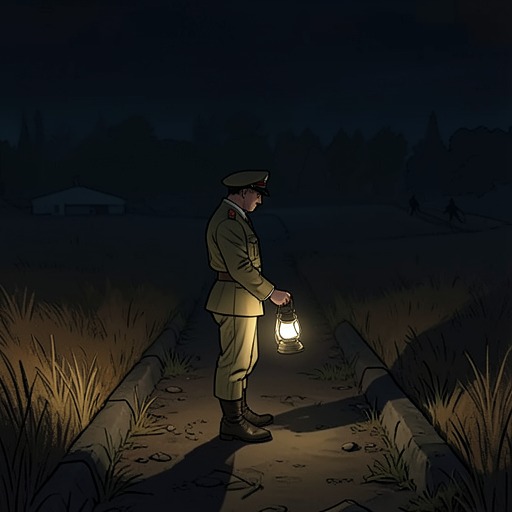
At the Place de France, he encounters Forsans and Daligot, two other flying-school trainees also trying to get to England. They spend the day searching for a way out. The harbor gates are watched by gendarmes, and they see no Polish uniform in the streets; they conclude that the last British ship carrying Polish troops has probably already departed. By about eleven that night, under a gas lamp, their prospects seem exhausted. The narrator’s resolve weakens, and he considers whether he has done all that can reasonably be expected of him.
The turning point is the sudden arrival of a Polish corporal, who tells them that the British cargo ship Oakrest, carrying Polish troops from North Africa, is due to sail at midnight. He has come ashore to buy food to supplement the ship’s rations. To the narrator, the coincidence feels like an intervention at precisely the moment when his determination is failing; the corporal’s information converts an apparently closed harbor into a narrow opportunity.
Boarding the Oakrest
The corporal lends Forsans a Polish tunic and Daligot a Polish cap. The narrator has no uniform, so he uses his knowledge of Polish and loudly issues orders to his companions as they pass the gendarmes guarding the harbor entrance. Two Polish officers on duty also help them up the gangplank after he gives them a whispered, invented account of a special intelligence mission. Their escape depends on quick improvisation, borrowed clothing, and the cooperation of people already aboard.
The three spend a quiet night at sea in a coal bunker. The narrator falls asleep imagining a triumphant entry into Berlin on a white horse, but a Polish bugle wakes him before the fantasy reaches its end. Casablanca thus marks a passage from isolation and stalled escape to movement toward England, while the abrupt interruption of the dream keeps imagined glory distinct from the precarious reality of their departure.